May 29, 2026 • Odalys Ferreira • 10 min reading time • Prices verified June 18, 2026
Schoolhouse Glass Pendants: The Globe-and-Fitter Tradition, Sized and Priced for Real Kitchens
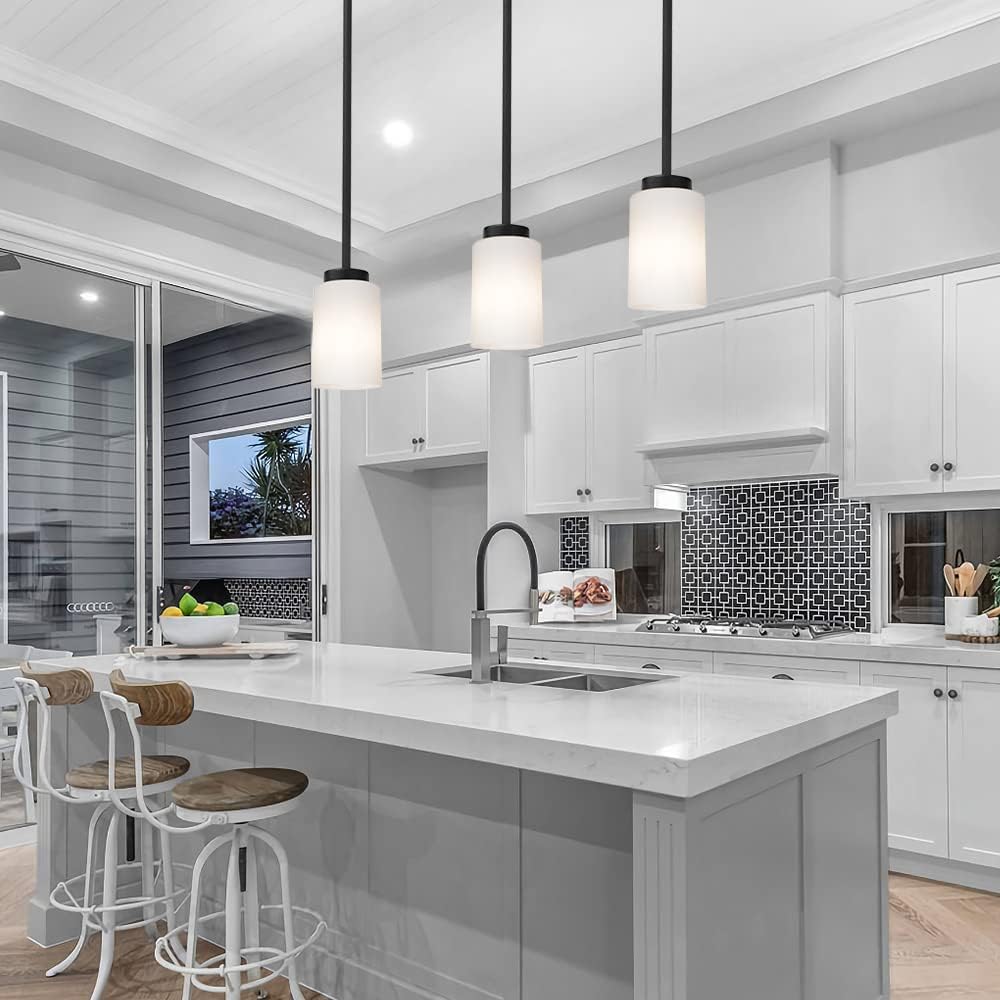
You found a schoolhouse pendant you love — that clean glass globe sitting on a flat metal plate called a fitter — and now you’re staring at six options that look nearly identical in the thumbnail but range from $85 to $650 each. What’s the difference, and does it actually matter in a kitchen? This guide is for the renovator or designer who already knows roughly what they want but needs a decision framework: how to match globe diameter to the space, how to read the fitter-to-globe relationship, where the price jumps are genuinely justified, and where you’re just paying for a name. We’ll cover glass type, sizing math, finish tradeoffs, and a clear price-tier breakdown — so you leave with a spec in hand, not just inspiration.
What “Schoolhouse” Actually Means (and Why the Fitter Is the Detail That Matters)
The term “schoolhouse pendant” refers to a fixture type, not a brand. It describes a glass shade — almost always a globe or a slightly flattened sphere — that mounts over a metal fitter: a flat or shallow-flanged ring that both holds the glass and serves as the visual transition to the cord or stem. The style is rooted in early 20th-century institutional and industrial lighting — the kind that actually hung in schoolrooms, post offices, and factory floors from the 1910s through the 1950s.
The fitter is load-bearing to the look. A wide, exposed fitter with visible screw slots reads as utilitarian-authentic. A narrow, machined fitter with a brushed finish reads as more refined. When reviewers on Houzz and Apartment Therapy describe a schoolhouse fixture as feeling “cheap,” it’s almost always the fitter, not the glass — a thin stamped plate that flexes or a finish that rubs off where it contacts the shade.
Three glass types dominate the schoolhouse category:
- Opaline glass — a smooth, milky white glass that diffuses light evenly and glows without hotspots. Often mislabeled as “milk glass,” which is an opaque, pressed-mold product; opaline is typically mouth-blown or machine-blown with a semi-translucent quality. The distinction matters: opaline gives you soft, ambient light; milk glass can look flat and institutional.
- Clear seeded glass — clear or lightly tinted glass with small air bubbles introduced during the mouth-blowing process. Each bubble is a slight optical irregularity. The effect is warm, textural, and historically accurate to early American glasswork.
- Ribbed or fluted glass — a pressed or mouth-blown globe with vertical or horizontal ridges. More Art Deco-inflected than Victorian. Diffuses light well, hides fingerprints, and tends to read as slightly more contemporary.
Architectural Digest’s coverage of the schoolhouse revival notes that the resurgence in the 2010s was driven largely by the farmhouse-kitchen trend, but the fixture category has since detached from that context and reads across transitional, industrial, and even quietly modern interiors — largely because the fitter-and-globe silhouette is simple enough to absorb a wide range of finish pairings.
Sizing Math for Kitchen Pendants: The Numbers That Actually Govern the Decision
Apartment Therapy’s kitchen lighting guide identifies pendant sizing as the single most common mistake in DIY kitchen renovations — fixtures either too small (floating, weightless, ineffective) or too large (dominating the counter, hitting sightlines). Here’s the framework that holds across the schoolhouse category:
By the numbers:
| Counter / Island Width | Recommended Globe Diameter | Number of Pendants | Center-to-Center Spacing |
|---|---|---|---|
| 36–48 in | 7–8 in | 1–2 | n/a / 18–24 in |
| 48–72 in | 8–10 in | 2 | 24–30 in |
| 72–96 in | 10–12 in | 2–3 | 24–30 in |
| 96+ in | 10–14 in | 3 | 28–34 in |
Hang height: The Lighting Design Lab’s residential pendant spacing principles establish 30–36 inches from the bottom of the shade to the counter surface as the functional range for task lighting over a kitchen island. Below 30 inches, you’re in the sightline of a standing adult; above 36 inches, you lose task-light effectiveness and the fixture starts to read as ambient-only.
For 9-foot ceilings — which is the current standard in new construction — a pendant on a standard 6-inch canopy plus 12 inches of cord puts the shade at roughly 88 inches from the floor, or about 28 inches above a 36-inch counter. That’s at the low end. Most electricians rough in at 12–18 inches of cord and then the homeowner adjusts at install. Budget for a cord that can be cut or looped; many schoolhouse fixtures in the $150–$400 range use field-adjustable twisted cloth cord that accommodates this.
This Old House’s pendant installation documentation notes that junction box weight ratings are frequently overlooked: most shallow-profile j-boxes are rated for 35 lbs, which is more than sufficient for a single glass globe pendant (typically 2–6 lbs), but becomes relevant if you’re installing a cluster or a heavier milk-glass globe on a steel fitter.
Sloped ceilings: The schoolhouse category is mixed here. Fixtures with a canopy-mount fitter design (fitter attaches at the shade, canopy is separate at ceiling) can usually accommodate sloped ceilings with an angled canopy adapter. Fixtures where the fitter is integrated into the canopy plate — common in the $85–$150 tier — typically cannot without a third-party adapter, which introduces a visible seam. Worth confirming before ordering.
Price Tiers: Where the Money Goes and Where It Doesn’t
The schoolhouse pendant market in mid-2026 spans roughly $85 to $700+ per fixture. The jumps between tiers are real, but they’re not always where buyers assume.
$85–$150: Machine-pressed glass, stamped fitters
At this tier, you’re almost certainly getting machine-pressed glass — molded under pressure rather than blown by a glassblower. The shape is consistent, which isn’t bad, but the texture is shallower, the wall thickness more uniform, and the light diffusion flatter. Fitters at this price are typically stamped steel with a baked-on powder coat or electroplated finish. Owner reviews across Amazon and Wayfair consistently note that the finish on fitters at this tier shows wear at the glass contact point within 1–2 years. That said, for a rental refresh or a secondary space, the silhouette reads correctly from six feet away.
$150–$350: The practical sweet spot
This is where the schoolhouse category earns its reputation. Rejuvenation’s house-line pendants, Schoolhouse Electric’s standard collection, and comparable offerings from Cedar & Moss land here. Glass at this tier is typically machine-blown rather than mouth-blown — a meaningful distinction. Machine-blown glass is formed by injecting air mechanically into a mold; mouth-blown glass is shaped by a glassblower’s breath and rotation, producing slight irregularities in wall thickness that interact with light more dynamically. At this tier you’ll see both; the product listing usually specifies, and when it doesn’t, seeded glass at this price point is almost always machine-blown.
Fitters at this tier are typically cast or machined rather than stamped, and finish quality is meaningfully better. Rejuvenation’s sizing guide specifies wall thickness and fitter-thread dimensions, which matters when you’re mixing fixtures across a kitchen and need consistent geometry.
$350–$650+: Mouth-blown glass, solid-brass fitters, studio provenance
Above $350, you’re paying for glass quality and material provenance. Schoolhouse Electric’s mouth-blown opaline globes, hand-formed pieces from smaller American studios, and the premium tier at Rejuvenation and Visual Comfort use glass with genuine irregularity — slightly uneven rims, variation in wall thickness, visible breath marks. These aren’t flaws; they’re the evidence of process. Under a warm filament bulb, the wall variation creates a glow that machine-blown glass doesn’t replicate.
Fitters at this tier are typically solid brass or solid cast bronze, unlacquered or hand-aged. Unlacquered brass will patina — the rate depends on humidity and handling. Owners in the Mid-Atlantic and Pacific Northwest report visible patina within 6–18 months; in drier climates (Phoenix, Denver), the same fixture can hold its initial finish for 3–5 years. If the project requires finish consistency across years, specify lacquered brass and accept that it won’t age; specify unlacquered and document the expected shift for the client.
Architectural Digest’s schoolhouse lighting feature notes that the price-per-fixture at this tier is often a small fraction of total project cost — a $500 pendant over a $4,000 quartz island is 12% of the counter budget — but the visual impact outweighs that ratio significantly, particularly in photography-forward projects.
Finish Pairings and Bulb Temperature: The Two Variables That Change Everything
Finish pairings: The schoolhouse globe is finish-neutral in silhouette, but the fitter finish drives the tonal read of the room.
- Aged brass / unlacquered brass + opaline glass: warm, period-authentic, reads well against white oak, marble, and off-white painted cabinetry. The dominant pairing in the 2022–2026 transitional kitchen wave.
- Matte black + clear seeded glass: industrial, graphic, higher contrast. Works best against white or very light cabinetry where the black fitter reads as a punctuation mark rather than a shadow.
- Polished nickel + ribbed or fluted glass: more formal, slightly Art Deco. Less common but period-correct for 1920s–1940s revival interiors.
- Blackened steel + opaline: the unexpected pairing that Apartment Therapy profiles repeatedly identify as underused — the warmth of the opaline reads against the cool steel as an intentional temperature contrast.
Bulb color temperature: This is where glass type becomes a specification decision, not an aesthetic one.
- Opaline glass absorbs blue-spectrum light more readily than warm light. At 4000K (neutral white), opaline reads flat and slightly clinical. At 2700K–3000K, it glows. Spec 2700K filament-style LED or incandescent-equivalent for opaline every time.
- Seeded clear glass transmits light with minimal filtering. It will show the bulb source directly — which means filament-style bulbs (tubular T10, globe G16.5) read beautifully; standard A19 LEDs look like a bulb inside a jar. The bulb choice is a visible design decision, not background infrastructure.
- Ribbed or fluted glass falls between the two: it diffuses enough to obscure the bulb shape but not enough to eliminate hotspots with non-filament sources. A frosted-filament LED at 2700K is the low-drama answer.
The Decision Rule
If you’re working with a budget of $150–$300 per fixture and need 2–3 over a standard island: the Rejuvenation and Schoolhouse Electric house lines deliver consistent geometry, adequate glass quality, and finish options that read well at this tier. Machine-blown opaline or seeded glass at this price point is not a compromise — it’s the right material for the use case.
If the project is client-facing, photograph-forward, or involves unlacquered brass fittings where patina will be part of the story: step to the $350–$600 tier, specify mouth-blown glass explicitly, and confirm in writing whether the fitter is solid brass or brass-plated. The fitter material is not always listed; call the retailer if the listing is ambiguous.
If the globe diameter math puts you at 12 inches or larger and you’re running three fixtures: weigh the visual mass carefully against ceiling height. A trio of 12-inch opaline globes over a 9-foot ceiling reads as intentional and architectural. Over an 8-foot ceiling, that same trio can feel like it’s dropping toward the counter. Scale down to 10-inch globes and add a fourth if coverage is the goal.
The schoolhouse pendant earns its durability in the fixture canon because the design problem it solves — diffuse, warm, human-scale task and ambient light — doesn’t change with trend cycles. The globe-and-fitter combination has been solving that problem for over a century. The spec decisions that make it work in your kitchen are smaller than they appear: diameter, hang height, glass type, bulb temperature. Get those four right, and the fixture handles the rest.