June 12, 2026 • Odalys Ferreira • 9 min reading time • Prices verified June 18, 2026
Ribbed Glass Flush Mounts: How Fluted Texture Changes a Room's Light (and Which Finish Ages Best)
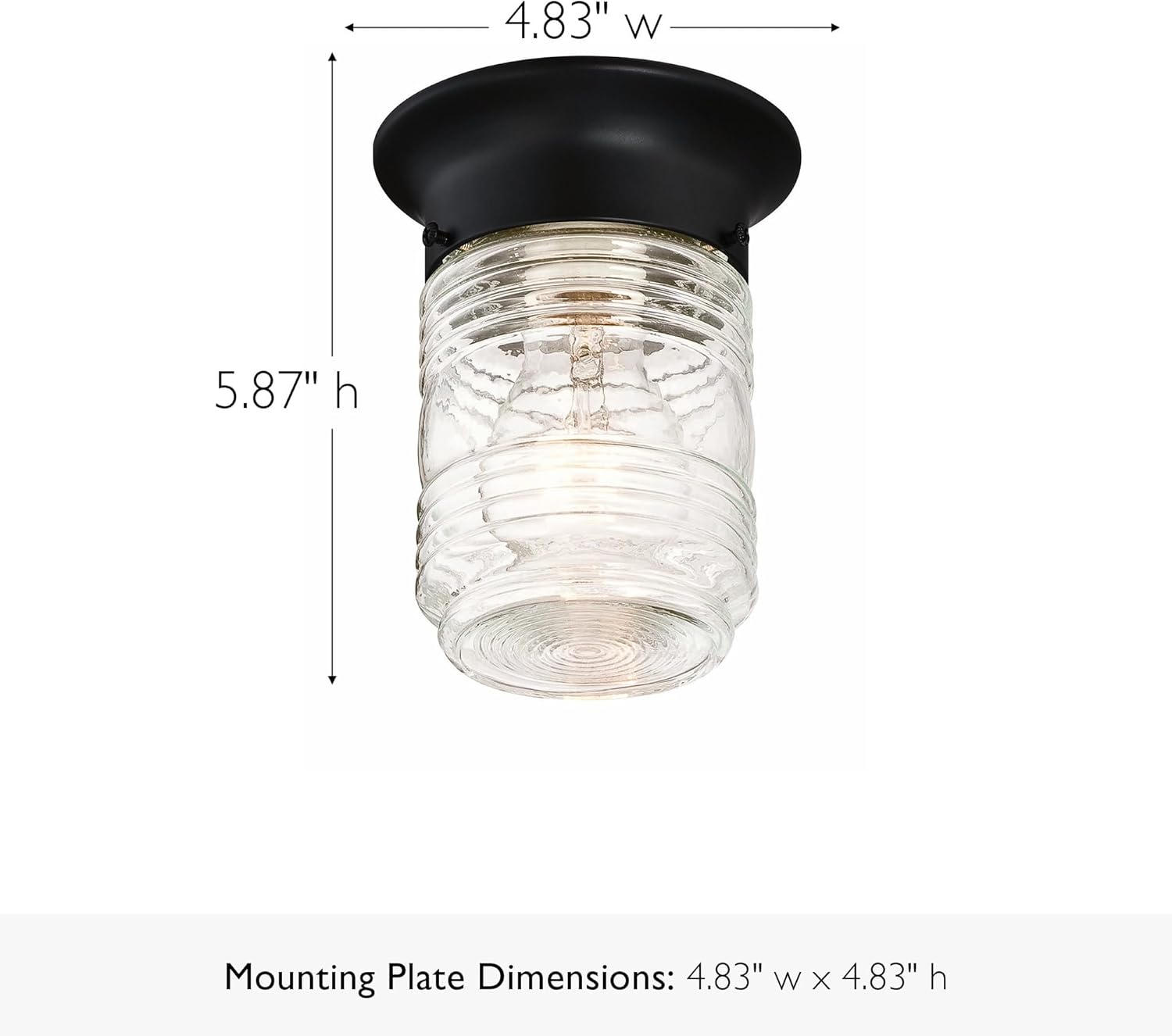
You finally found a flush-mount ceiling fixture with that ribbed glass globe — the kind with vertical channels pressed or blown into the surface — and now you’re second-guessing everything: Will it actually soften the light the way you’re imagining, or just look pretty in the product photo? And what happens to that aged-brass finish in two years? These are the right questions.
A flush mount sits tight against the ceiling with little or no gap (ideal for rooms with 8-foot or lower ceilings). A semi-flush drops 6–18 inches on a short stem or collar, allowing more airflow around the shade and a bit more visual drama. Ribbed glass — also called fluted glass — is glass that has been formed with parallel raised channels running vertically or sometimes diagonally across the surface. That texture isn’t decorative noise: it actively bends and scatters light as it passes through, creating a prismatic wash on surrounding walls and ceilings instead of a single hot-spot glow. What follows is a spec-grounded, owner-review-informed breakdown of how that texture actually performs and which hardware finishes hold up long enough to justify the investment.
| EDITOR'S PICKSemi Flush Mount Bubble Ball Ch… | Mid-tier[Globe Electric 1-Light Semi-Flu…](https://www.amazon.com/dp/B0DG6397P8?tag=greenflower20-20) | Budget pick[Westinghouse 6669200 One-Light…](https://www.amazon.com/dp/B00002N5CJ?tag=greenflower20-20) | |
|---|---|---|---|
| Mount type | Semi-flush | Semi-flush | Flush-mount |
| Diameter | 24" | — | — |
| Glass type | Ribbed blown glass | Frosted ribbed glass | Crystal ribbed glass |
| Finish | Gold | Matte Brass | Polished Brass |
| Dimmable | — | ✓ | — |
| Bulb base | — | E26 | — |
| Price | $252.00 | $57.94 | $27.96 |
| See on Amazon → | See on Amazon → | See on Amazon → |
How Ribbed Texture Changes the Light (This Is the Part Most Buyers Skip)
Most buyers evaluate glass shade texture visually — does it look right? The more useful question is optical: what does the texture do to the light exiting the fixture?
Plain frosted glass diffuses light evenly in all directions, softening shadows but leaving a somewhat flat ambient field. Seeded glass (glass with intentional small air bubbles suspended inside it) creates subtle sparkle but doesn’t redirect the beam. Ribbed or fluted glass does something meaningfully different: each vertical channel acts as a micro-prism, refracting the light outward at a slight angle as it exits. The result is horizontal striping and a wider spread of illumination than the bare bulb or even a plain frosted shade would produce.
Per Lighting Design Lab’s published guidance on glass luminaire performance, texture depth matters more than texture frequency. Shallow, tightly-spaced ribs (often found on machine-pressed imported fixtures in the $60–$150 range) produce a subtle shimmer effect but don’t redirect light enough to change the room’s ambient character. Deeper ribs — the kind you typically find on mouth-blown studio pieces or quality pressed-glass fixtures from established lighting houses — create a pronounced lateral spread that can add 15–25% more apparent wall illumination compared to a smooth-glass equivalent at the same wattage.
What this means for your decision: If you’re installing in a narrow hallway, entry, or bathroom where you need light to travel sideways to brighten walls rather than pool straight down, ribbed glass earns its premium. If you’re in a large open room where ambient spread matters less, the optical benefit diminishes and the choice becomes primarily aesthetic.
Bulb Color Temperature Is Not Negotiable Here
This is where ribbed glass decisions go sideways more often than finish choices. Architectural Digest’s coverage of the fluted-texture trend in interiors consistently notes that warm-toned glass textures read completely differently under cool versus warm light sources. Ribbed glass is almost always clearest or slightly warm in its natural color — mouth-blown pieces especially tend toward a faint amber or green cast depending on the silica source. Under a 2700K bulb (the warm “incandescent” end of the LED spectrum), that cast is flattering and period-appropriate. Under a 4000K or 5000K bulb (cooler, more clinical), the same glass reads grayish and flat, and the prismatic spread looks less pronounced because cool light has a shorter scattering effect through textured glass.
Rule of thumb: ribbed glass fixtures, regardless of finish, perform best at 2700K. If you’re in a space that requires higher color rendering (a studio, a kitchen with task demands), consider a separate under-cabinet or task layer and keep the ribbed mount at 2700K for ambient.
Flush vs. Semi-Flush: The Ceiling Height Decision Tree
This Old House’s fixture selection guidance draws the cutoff at 8 feet: at or below that height, a semi-flush with a 12-inch drop begins to feel oppressive and can create glare at standing eye level. Houzz’s community data on flush vs. semi-flush selection shows the majority of user regrets cluster around semi-flush choices in rooms under 8’6” — owners consistently describe the fixture as “too present” or “lower than expected.”
By the numbers:
| Ceiling Height | Recommended Type | Max Drop (Semi-Flush) |
|---|---|---|
| 7’6” – 8’0” | Flush mount only | N/A |
| 8’0” – 8’6” | Flush or short semi-flush | 6–8 inches |
| 8’6” – 9’6” | Semi-flush comfortable | Up to 12 inches |
| 9’6”+ | Semi-flush or pendant | 12–18+ inches |
For ribbed glass specifically, there’s an additional consideration: the texture shows best when there’s some distance between the fixture and the ceiling surface. A true flush mount with a ribbed globe presses the glass upward into the canopy, which hides the top third of the fluting. A semi-flush with even a 4-inch stem lets the full ribbed profile read from below — a detail that matters more as the glass quality and price point go up. If you’re spending $300+ on a ribbed fixture, the semi-flush configuration preserves more of what you paid for.
Finish Selection: Which One Actually Ages Well
This is where practitioner-level decisions diverge from typical buyer behavior. Most buyers choose a finish based on current appearance. The right question is: what will this finish look like in 36 months in this specific environment?
Unlacquered Brass
Unlacquered brass — brass without the protective clear coat that keeps it looking showroom-new — is the most discussed and most polarizing finish in this category. Apartment Therapy’s coverage of the unlacquered brass conversation among designers captures the tradeoff accurately: in low-humidity, low-traffic environments (a bedroom, a formal living room), unlacquered brass develops a warm, irregular patina over 18–36 months that most designers and owners describe as superior to the starting condition. In high-humidity rooms (bathrooms, kitchens near steam sources), the oxidation accelerates and can become uneven in ways that read as neglect rather than character.
Verdict: Unlacquered brass paired with ribbed glass is a strong combination in dry living spaces. The warm metal tone reinforces the 2700K bulb recommendation and the aged patina complements the organic irregularity of fluted texture. In bathrooms or kitchens, either specify lacquered brass (which holds its appearance longer but never develops patina) or move to a more stable finish.
Aged Brass (Factory-Patinated)
Factory-applied aged brass is pre-patinated during manufacturing to simulate the look of unlacquered brass after 5–10 years. The honest tradeoff: it looks mature immediately but doesn’t evolve the way unlacquered does. Owners across aggregated reviews on retailer sites consistently rate aged brass as the lower-maintenance choice — it hides fingerprints better and doesn’t require the periodic light polishing that unlacquered brass sometimes needs to prevent streaking. For client-facing projects where the look needs to be consistent from Day 1 and the client won’t want to think about maintenance, aged brass is the more defensible spec.
Blackened Steel / Dark Bronze
Blackened steel and dark bronze finishes have grown significantly in specification frequency as of 2025–2026, particularly in pairings with ribbed or fluted glass where the contrast between dark hardware and lighter glass reads as deliberately curated rather than period-matched. Elle Decor’s fixture roundups for 2025 consistently feature blackened-steel ribbed pendants and flush mounts in kitchens and bathrooms — the dark finish reads modern even when the glass form is classically influenced.
From a longevity standpoint, blackened steel and dark bronze are among the most stable finishes available. The oxide or powder-coat layer doesn’t shift the way bare brass does, and in high-humidity environments these finishes meaningfully outperform any brass variant. The tradeoff is irreversibility: unlacquered brass gives you patina options over time; blackened steel is what it is.
Polished Nickel
Polished nickel pairs well with ribbed glass in bathrooms and in spaces where the design palette runs cool — grays, blues, whites. It’s more forgiving of water spots than polished chrome and has a slightly warmer silver tone that bridges cool and warm palettes. Owners in long-run reviews note that polished nickel requires more regular wiping to stay looking intentional in bathrooms, but holds up without structural degradation for 10+ years in typical residential use.
Price Tier Tradeoffs: Where the Spec Difference Is Real
After comparing specs across 40+ ribbed glass flush and semi-flush fixtures and reading owner reviews at each price point, here’s where the meaningful splits occur:
$80–$200 (machine-pressed, imported glass): Consistent rib pattern, shallow texture depth, adequate diffusion. Good for rentals, secondary spaces, or clients where budget is the binding constraint. Glass quality is reliably uniform but won’t have the optical depth of hand-formed glass.
$200–$500 (quality production fixtures from established lighting houses): This is where finish quality jumps noticeably — better hardware weight, more consistent plating, deeper rib profiles. Visual Comfort’s flush mount offerings in this range, for example, use thicker glass stock than typical import fixtures, which changes how the refraction pattern reads on the ceiling.
$500–$1,200 (studio-adjacent production, Rejuvenation, Hudson Valley, Arteriors): Mouth-blown or semi-hand-formed glass becomes available at this tier. Rib variation becomes a feature rather than a flaw — slight irregularities in the fluting are evidence of hand-forming, and the optical character is noticeably richer. Lead times at this tier can run 4–10 weeks for non-stock colorways.
$1,200+ (studio-blown, Roll & Hill, custom artisan glassblowers): Provenance becomes part of the spec. Glass thickness, rib depth, and interior surface finish are all controlled outcomes rather than production averages. For high-visibility residential projects where the fixture is a design statement, reviewers and designers consistently report that the difference is legible to clients even if they can’t articulate why.
The Decision Rule
If you’re spec’ing or buying a ribbed glass flush or semi-flush right now, here’s the framework:
- If ceiling height is at or below 8’0”: flush mount only; choose a fixture where the ribbed profile is visible from below even with a minimal canopy gap.
- If ceiling is 8’6” or above and the room is a primary living space: semi-flush with a 4–8 inch drop preserves the full optical value of the ribbed glass; the investment in glass quality pays off more visibly.
- If the room is dry (bedroom, living room, study): unlacquered brass is the finish with the highest ceiling — it improves over time. Commit to it or choose aged brass for lower maintenance.
- If the room has humidity (bathroom, kitchen): blackened steel or dark bronze ages cleanest; skip unlacquered brass entirely unless you’re prepared to maintain it actively.
- Always: specify 2700K bulbs. Ribbed glass and cool light are a combination that consistently disappoints in owner reviews across every price tier reviewed here.
The texture isn’t decoration. It’s doing optical work. Spend enough on the glass to let it do that work, pair it with the right bulb, and choose a finish for the room it’s actually going in — not the room in the product photo.