June 8, 2026 • Odalys Ferreira • 11 min reading time • Prices verified June 18, 2026
Plug-In Pendant Lights: The No-Electrician Upgrade That Actually Works
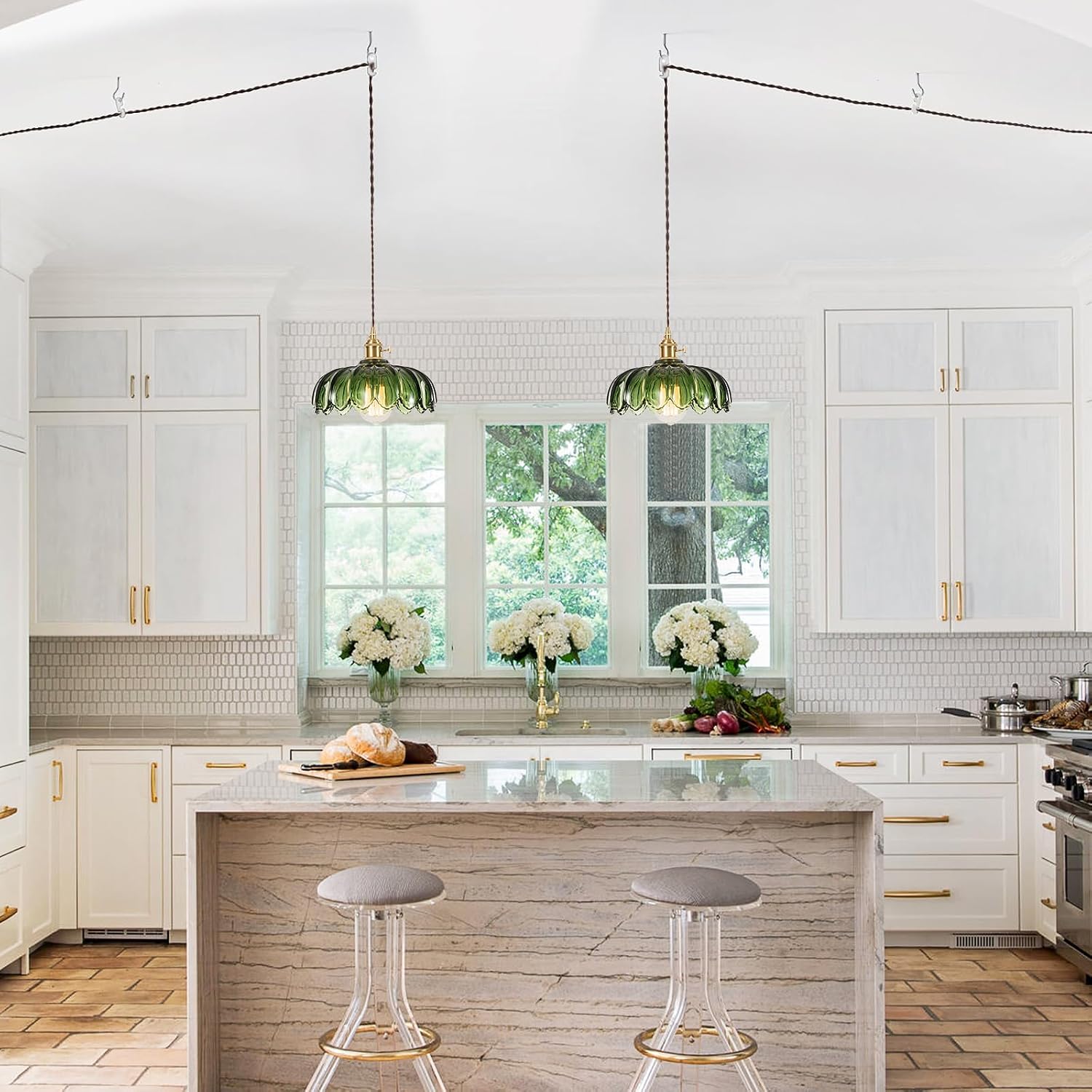
You found a pendant you love — and then realized it requires an electrician, a junction box in the ceiling, and possibly a permit. For renters, that’s a hard stop. Even for homeowners, it’s a three-week project that kills the momentum of a weekend refresh. That’s the exact problem plug-in pendants solve. A plug-in pendant light is a glass (or other material) shade on a cord that terminates in a standard wall plug rather than bare wire — meaning you mount a ceiling hook, run the cord to the nearest outlet, and you have a real pendant light with zero electrical work. The catch is that “plug-in” covers everything from $25 plastic globes to $180 hand-blown glass statements, and the installation details — cord length, ceiling clearance, cord management — can make or break whether it reads as designed or jury-rigged. This guide, built from comparing specs across 40-plus fixtures and reading aggregated owner reviews, gives you the decision framework to get it right.
What Makes a Plug-In Pendant Actually Look Good
The fundamental tension in this category is cord visibility. A hardwired pendant hides its wiring inside the ceiling; a plug-in pendant runs its cord from ceiling hook to wall outlet in plain sight. The difference between a plug-in that looks intentional and one that looks temporary comes down to three variables: cord material, cord management strategy, and glass quality.
Cord material is where the category divides most sharply. Fabric-wrapped cords — twisted cotton, linen, or jute — read as deliberate. Plastic-sleeved cords read as transitional-at-best. Across aggregated owner reviews, the single most consistent complaint in the plug-in pendant category is cord stiffness: plastic cords resist draping naturally and require days of working into position before they hang straight. If a listing doesn’t specify fabric or textile cord, assume plastic and plan accordingly.
Glass quality matters more in this category than in hardwired categories, because the fixture has to carry the visual weight that a ceiling canopy and junction box normally share. When reviewers describe a pendant’s glass as “heavy” or “solid,” they’re almost always describing mouth-blown or hand-gathered glass — shaped by a human blowing air through a pipe, which introduces slight wall-thickness variation and organic surface character. That variation is exactly what catches light differently than a machine-pressed globe (glass formed in molds under pressure, producing uniform walls and no surface variation). The organic irregularity signals craft in a way that uniform machine glass simply cannot replicate.
A note on glass terminology: Seeded glass contains intentional small air bubbles suspended in the glass wall, which scatter light softly. Amber and green are transmission colors — they don’t just tint the light, they change the apparent warmth of the room (more in the FAQ below). Opaline is a semi-opaque white glass that diffuses the bulb entirely, eliminating visible filament. These are not interchangeable; know which you’re buying before you click.
The Installation Details That Actually Matter
Ceiling clearance and the S-hook constraint
Most plug-in pendants ship with an S-hook — a simple curved hook that loops over a ceiling-mounted swag hook and holds the cord in a gentle arc before dropping vertically to the shade. What listings often omit: you need at least 4 inches of clearance between the ceiling surface and the first horizontal cord run to accommodate the hook’s geometry without the cord kinking against the ceiling. This Old House’s pendant installation guidance identifies mounting-hardware geometry as the most commonly overlooked variable in DIY pendant installs, and owner reviews across multiple plug-in models echo that finding — the S-hook clearance surprise shows up repeatedly as a post-purchase frustration in rooms with low-profile crown molding.
If you’re working with a tight ceiling, look for fixtures that include a ceiling canopy plate (a flat disk that mounts flush to the ceiling with a cord exit hole) rather than an S-hook. Canopy plates eliminate the clearance problem entirely at the cost of a small amount of installation complexity — two screws into a drywall anchor rather than one hook.
Cord length and positioning
Cord length is more consequential than most buyers anticipate. A short cord in the 6-to-8-foot range forces your outlet placement to dictate your fixture placement, which is the opposite of intentional design. A cord in the 15-foot range gives you genuine positioning freedom, with the excess managed along the baseboard or tucked behind furniture. Owner reports on several well-reviewed plug-in pendants document cords reaching from ceiling hook all the way to a floor-level outlet — a meaningful differentiator when you’re trying to position a fixture over a dining table that isn’t directly adjacent to an outlet.
By the numbers: cord length benchmarks
| Cord length | Practical implication |
|---|---|
| 6–8 ft | Outlet must be near the hang point; limits placement |
| 10–12 ft | Comfortable for most 8–9 ft ceiling rooms with a nearby outlet |
| 15 ft+ | Full positioning freedom; excess manageable along baseboard |
Fixtures with on/off switches built into the cord itself — a feature that appears on several mid-tier plug-in pendants — add a meaningful convenience upgrade, since it means you don’t have to reach behind furniture to switch the outlet or rely on a smart plug for basic on/off control.
Glass Color: Amber vs. Green vs. Clear
This is where the practitioner’s intuition separates from the beginner’s impulse to choose by aesthetics alone. Glass color in a pendant doesn’t just affect how the fixture looks when the bulb is off — it fundamentally changes the quality of light the fixture emits, and that changes how the whole room feels after dark.
Amber glass transmits warm wavelengths and absorbs cooler ones. Even a neutral-white bulb rated at 2700K–3000K reads warmer and more amber-toned through the shade. In rooms that already skew warm — aged brass hardware, warm wood tones, terracotta or ochre walls — amber glass amplifies the atmosphere. In cooler rooms with white walls, chrome hardware, or gray stone surfaces, it can read muddy rather than warm.
Green glass — particularly the deep bottle-green that has dominated design editorial over the past two years, as documented in Architectural Digest’s Best Pendant Lights of 2025 roundup — transmits a narrow band of the spectrum. The practical result: the fixture emits notably less usable light than a clear or seeded-glass shade of the same wattage. If the pendant is decorative-only, that’s acceptable. If you’re counting on it for kitchen prep or reading, note that the Illuminating Engineering Society’s Lighting Handbook (10th Edition) identifies 30–50 footcandles as the recommended task illuminance range for kitchen counters — a level that is difficult to achieve through deeply tinted glass without meaningfully increasing bulb wattage.
Clear and seeded glass transmit the full spectrum, with seeded glass adding diffusion that softens glare without color-shifting. These are the most flexible choices when the pendant needs to do real lighting work rather than purely decorative work.
Decision rule: if the pendant is your primary light source, default to clear or seeded glass. If it’s a layer of ambiance over existing overhead lighting, amber or green are legitimate design choices with understood trade-offs.
Cord Management: Making the Cord Look Intentional
The visible cord is the plug-in pendant’s defining challenge. Solutions break into three practical tiers:
The swag arc is the classic approach: the cord loops from the ceiling hook across to a second hook set into the wall, then drops vertically to the shade. Apartment Therapy’s renter-focused pendant lighting coverage consistently identifies the double-hook swag as the highest-impact, lowest-damage cord management method available without tools. The cord run from the wall hook to the outlet can be managed along the baseboard using adhesive cord clips, which read as nearly invisible against painted trim.
The wall-channel cover is a paintable plastic channel that snaps over the cord run and gets painted to match the wall. It reads as more permanent than clips, requires slightly more commitment, and is fully removable without wall damage if you use painter’s tape under the adhesive mounting strip.
The “let it hang” approach works only in specific geometries — outlet directly above or immediately beside the fixture position — where the excess cord can coil behind the fixture or tuck neatly into the shade recess. It requires enough cord slack to avoid tension, and it only reads as intentional when the cord length is very short.
Fabric-wrapped cord color is the variable that ties all three methods together. A cord that closely matches the wall color is significantly harder to notice than a high-contrast cord running diagonally across a white wall. Several manufacturers now offer cords in white, black, gray, and natural linen; matching to your wall is worth the extra consideration at purchase.
Three Picks by Use Case
The Renter’s Fast Upgrade
For renters who need ambiance quickly, in a room with standard ceiling height and a nearby outlet, the priority is minimal installation footprint and glass quality that punches above the price. Look for a fabric-wrapped cord, a canopy plate or a low-profile S-hook, and seeded or clear glass with an E26 socket that accepts standard dimmable LED filament bulbs. This tier typically runs $40–$70.
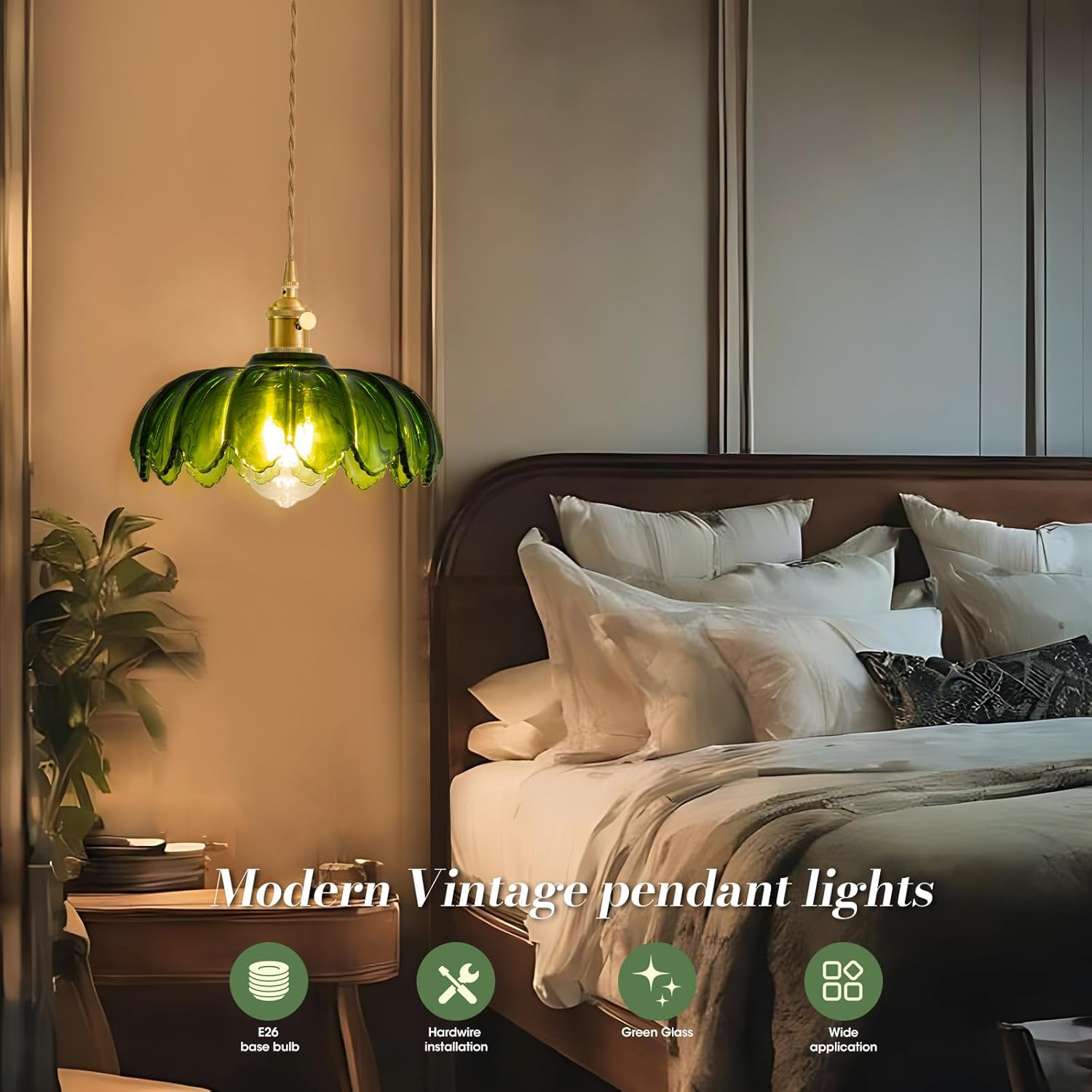
Plug
$30.99
In stock on Amazon
Check price on AmazonThe Dining or Island Pendant
For owners hanging over a kitchen island or dining table, cord length (target 15 feet or longer), glass clarity, and confirmed dimmable compatibility matter most. Organic globe forms in clear or lightly seeded glass consistently earn “most-complimented item in the room” designations from owners who want a form that reads studio-made without a studio price. Per Houzz’s kitchen island lighting editorial guidance, the target hang height is 30–36 inches above the countertop surface — measure your ceiling height before purchasing to confirm the cord reaches that position and still reaches the outlet. This tier typically runs $80–$130.
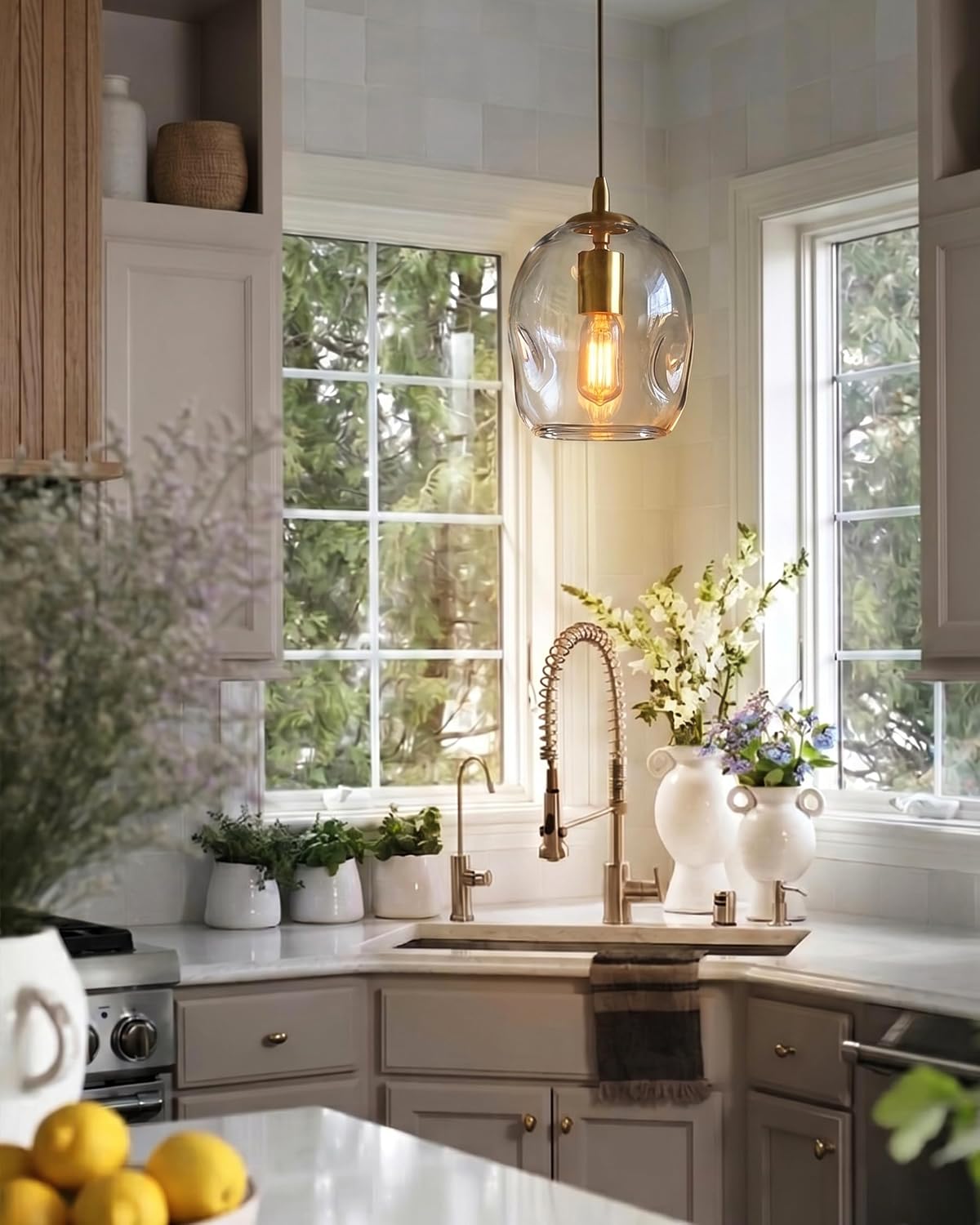
CASAMOTION
$72.50
In stock on Amazon
Check price on AmazonThe Decorative Atmosphere Layer
For buyers who already have adequate overhead lighting and want a pendant purely as a warm ambiance layer, deeply tinted glass — amber or bottle green — is a legitimate choice. Prioritize a built-in cord switch for easy on/off control, and plan for a smart plug if dimming is desired, since standard wall-switch dimmers do not work on outlet circuits. Architectural Digest’s 2025 pendant editorial identifies bottle green as the dominant statement color in this decorative-pendant tier. Budget $100–$180 for hand-gathered or mouth-blown glass in this category.
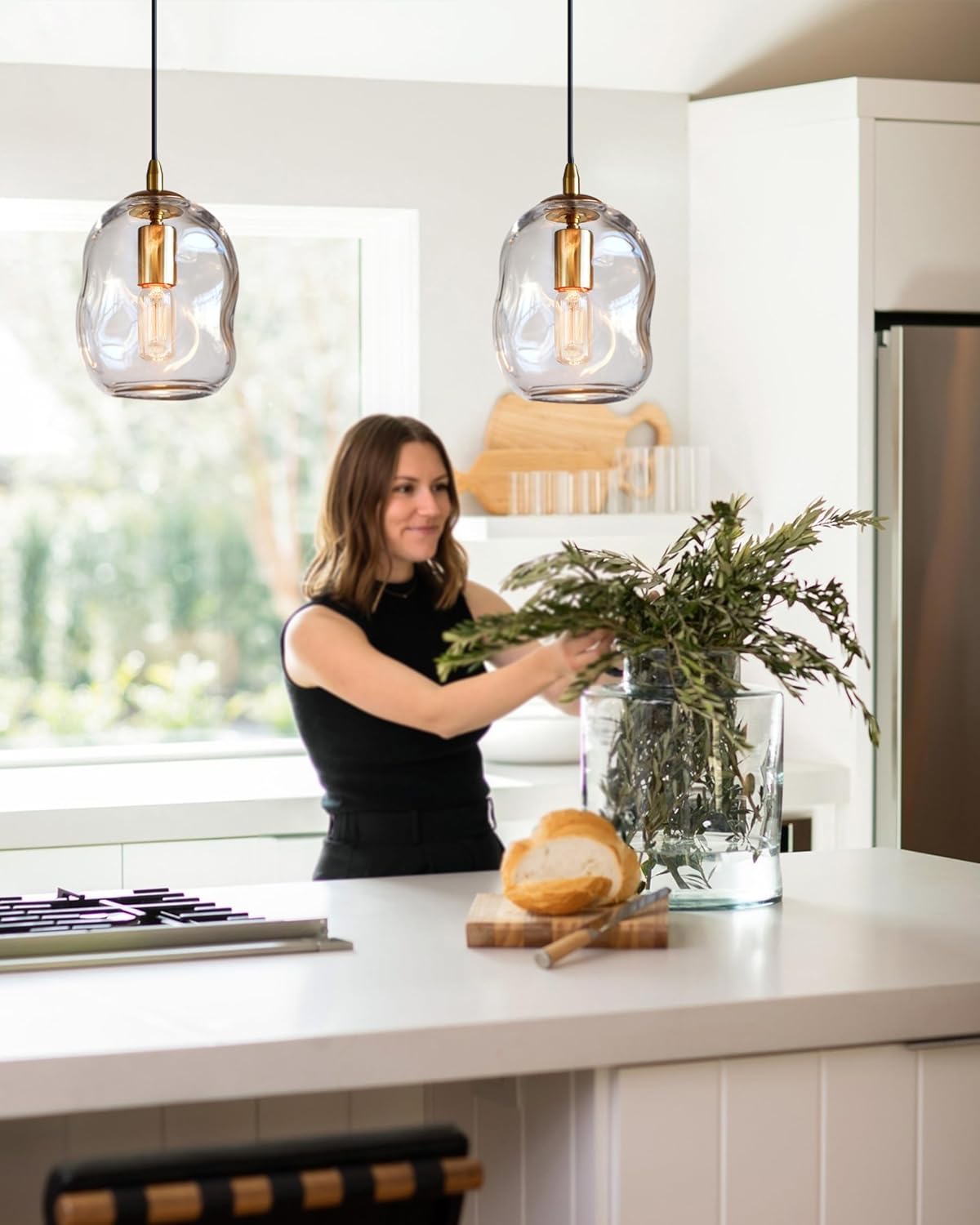
CASAMOTION
$139.50
In stock on Amazon
Check price on AmazonFrequently Asked Questions
Can I dim a plug-in pendant light? Yes, but both ends of the chain require attention. You need a dimmable bulb — explicitly labeled as such, since not all LED bulbs support dimming — and either a smart plug with dimming capability or an inline cord dimmer. Standard wall-switch dimmers do not work on outlet circuits. LED filament bulbs dim most naturally and maintain warm color temperature at low levels; avoid non-dimmable LEDs, which typically flicker or drop to off rather than dim smoothly.
How do I minimize cord visibility? The double-hook swag method, described in Apartment Therapy’s renter lighting coverage, minimizes visible cord length. Run the remaining cord along the baseboard with adhesive clips painted to match. There is no method that fully conceals a plug-in cord, but a fabric-wrapped cord in a color matched to your wall comes closest to disappearing.
How much ceiling clearance do I need for an S-hook? Budget at least 4 inches between the ceiling surface and the top of the cord arc. If your ceiling is lower than 8 feet or you have crown molding reducing clearance, look for fixtures with a flush canopy plate rather than an S-hook, as noted in This Old House’s pendant installation guidance.
Does glass color meaningfully affect room brightness? Yes. Deeply tinted glass — especially bottle green and dark amber — can absorb a substantial portion of a bulb’s lumen output depending on glass thickness and saturation. The Illuminating Engineering Society’s Lighting Handbook (10th Edition) establishes task illuminance benchmarks that are difficult to reach through heavily tinted glass at standard residential wattages. If your space already feels dim, layer a tinted pendant over existing overhead light rather than using it as a replacement source.
Can I extend the cord if it’s not long enough? A rated extension cord is technically usable, but This Old House’s electrical safety guidance recommends treating extension cords as temporary solutions rather than permanent installations. Match or exceed the fixture’s rated amperage on any extension cord, and prioritize purchasing a fixture with a cord long enough for the application rather than extending.
The Decision Rule
If X, then Y:
- Renting, standard ceiling, need real ambiance fast → fabric-cord pendant with a canopy plate or low-profile S-hook, seeded or clear glass, dimmable LED filament bulb. Plug — $30.99
- Own the space, island or dining application, care about light quality → prioritize 15-foot-or-longer cord, clear or lightly seeded glass, confirmed dimmable compatibility, organic globe form. CASAMOTION — $72.50
- Decorative layer only, warmth is the point → amber or green glass is a legitimate choice; use a smart plug for dimming control and do not expect task-level illumination. CASAMOTION — $139.50
The no-electrician part is genuinely easy. The part that takes attention is making the result look like you planned it — and that is entirely a function of cord material, glass selection, and clearance math done before you buy.